


Learn Fast & Speak Fluently
3.8326.00 Reviews
App Specs
- Version
- 3.4.2
- Updated On
- License
- Free
- Downloads
- 5,000,000+
- Developer
- Aykonu
- Categories
- Education
- Platform
- Android
Screenshots
 Analysis by AppCompare
I tend to judge a language app less by its promise of fluency than by whether I can fit it into ordinary life and still remember something later. Learn Fast & Speak Fluently is an education app from Aykonu that puts short lessons, practice, and conversational situations in one place. It is free to install, rated for Everyone, and has a 4.3 average from around 8,500 ratings, with more than a million installs. That gives me a useful starting point, but the real question is whether its approach suits the way you want to learn.
How the learning experience fits everyday use
First off, the setup is a breeze. You download the app, choose your language, and you're off. The app kicks things off with a placement test to gauge your level, so you’re not stuck learning stuff you already know. It’s pretty intuitive, and I felt like it was really targeting my learning needs.
Short lessons work best as a repeatable habit
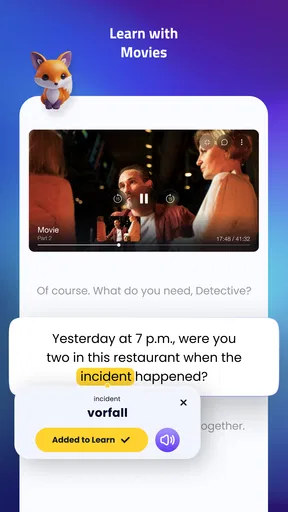
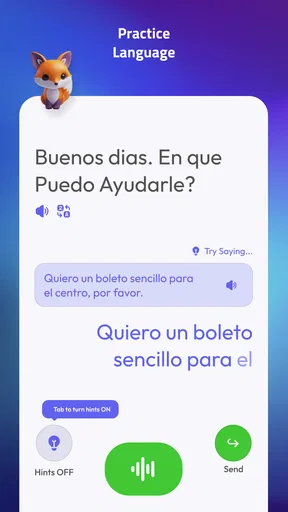
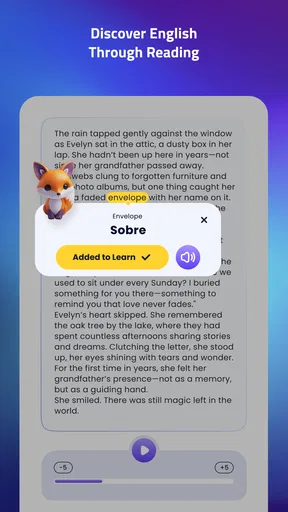
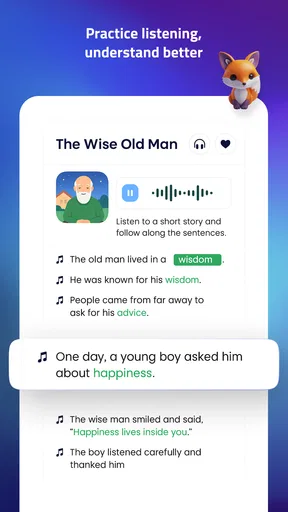
The core of Learn Fast & Speak Fluently lies in its interactive modules. They are structured to build vocabulary, grammar, and conversation skills. I appreciated the bite-sized lessons that fit into my coffee breaks. Each module involves a mix of reading, listening, and speaking exercises. The voice recognition feature is pretty accurate, making it fun to practice pronunciation and get instant feedback.
The short format is useful when your schedule is uneven: a few minutes before work, a wait for a bus, or a quiet break between tasks can become a manageable session. I would treat those sessions as a way to keep contact with the language, rather than assuming that a completed lesson means a skill is secure. A practical routine is to say new phrases aloud, then try to recall them later without looking. That small bit of retrieval makes the practice more active than tapping through an exercise and moving on.
If you already know some of your chosen language, the placement test is worth taking carefully rather than rushing through it. A too-quick answer can make a starting point feel mismatched; taking a moment to distinguish what you recognize from what you can actually produce gives the app a fairer chance to meet you at your level. I’d also use early lessons to notice which part needs the most attention. Understanding a written prompt and being able to say a response are different skills, and the mix of reading, listening, and speaking gives you a chance to spot that gap.
Conversation practice is useful, but not the whole conversation
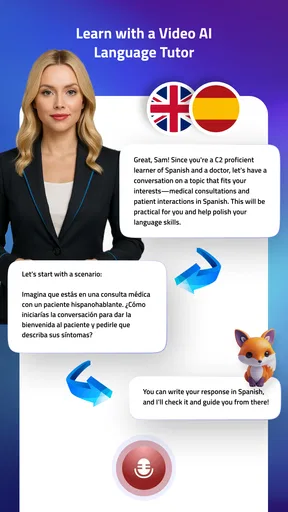
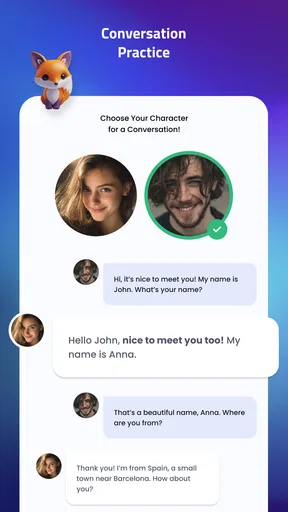
What sets this app apart is its focus on real-world usage. They’ve got these cool scenarios where you can practice conversations like ordering coffee or booking a hotel room. It’s like role-playing but without the awkwardness. I found myself more confident when trying out my new skills in actual conversations.
Those scenarios are most valuable as rehearsal, not as a substitute for a person who can respond unpredictably. Before a trip, for example, I’d practice the kind of exchange I expect to need, then make a short personal list of likely follow-up questions: asking someone to repeat a price, clarifying an order, or explaining that I did not understand. The app can help make familiar phrases feel less foreign, while real conversations still require patience and improvisation.
Worth Reading Before You Choose

EA SPORTS FC Mobile 26 Is a Bigger Football Game, but It Takes Time

Flipboard Shows What News Apps Must Do Beyond the Feed

Switching to Android Auto Means Rethinking Your Driving Routine

Google Calendar Makes a Crowded Week Easier to Manage

Ludo King Makes the Most of the Minutes Between Plans

Baby Panda World Brings Quick Play to Modern Phones, but Its Game Library Feels Busy
Speech recognition is encouraging when it helps you notice that a spoken attempt needs work, but I would not treat any automated response as a perfect judge of accent or naturalness. If a phrase is repeatedly misunderstood, I’d slow down, listen again, and try saying it in smaller parts before repeating it at normal speed. That is a useful way to turn feedback into practice rather than simply chasing a correct mark. For learners who need detailed correction from a teacher, this kind of app-based feedback will feel limited; for people who mainly need a low-pressure place to speak aloud, it has a clearer role.
Motivation should support learning, not replace it
Motivation can be a killer when learning a new language, but this app keeps it fresh with daily challenges. It’s not just about streaks; they’ve gamified the process with badges and achievements. I’m not usually one for badges, but I found myself oddly determined to collect them all!
I’d use the challenges as a nudge to return, not as a measure of how fluent I am. A streak can reward showing up even on a busy day, but it cannot tell you whether you can recall yesterday’s vocabulary or follow a new speaker. On days when I have little time, a brief review is more useful than rushing through several lessons just to keep a counter going. On days with more energy, I’d pair a lesson with a spoken recap in my own words.
There is a small trade-off here: badges can make the routine feel playful, but they can also pull attention toward completion instead of careful practice. I would set a simple personal target, such as being able to use a phrase without reading it, and let the app’s rewards remain secondary. That keeps the game-like layer helpful without letting it define progress.
Community has a different value from structured lessons
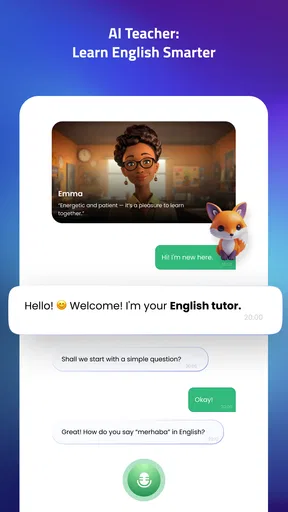
The app also fosters a sense of community. You can join groups and chat with fellow learners, which is a great way to practice and share tips. Plus, their support team is on the ball. I had a minor issue logging in once, and they resolved it within hours.
Groups can be especially useful when you want to compare ways of studying or find encouragement after the novelty of starting wears off. I would approach learner chats as informal practice rather than a source of guaranteed corrections: other learners may be at different levels, and tips are not the same as expert instruction. A good use is to bring one concrete question or phrase to a conversation instead of expecting a group chat to function like a full lesson.
The support experience in my case was reassuring, though one quick login fix does not tell me how every issue will be handled. For day-to-day use, I’d still keep my learning routine simple enough that a temporary access problem does not derail it: make a note of the phrase or topic you were working on, then return to that point when you can. That is a sensible habit with any learning tool, especially one you use in short sessions.
Free access, paid options, and what the price can tell you
The app is free to download, with in-app purchases listed from $4.99 to $29.99 per item. I see that as a low-friction way to try its learning style before deciding whether any paid option is worthwhile. The range signals that purchases are available at different price points, but it does not by itself tell me which item is best value or what access each one includes. I would check the purchase details inside the app before spending, and judge them against how consistently I use the lessons.
That distinction matters because the free starting point and the paid value are separate questions. If the basic experience already helps you build a steady routine, there may be no reason to buy anything immediately. If you reach a point where a particular paid item clearly supports the way you study, compare its stated contents with your actual needs rather than paying simply because you have already invested time. The app is currently version 3.3.1 and requires Android 7.0 or later, details worth checking against your device before you settle into a routine.
Where it sits among language-learning alternatives
Compared with flashcard-first tools, this app’s mix of reading, listening, speaking, and role-play gives practice a more conversational shape. Compared with a live tutor or language exchange, it is easier to use for a quick, private rehearsal, but it cannot offer the same spontaneous back-and-forth or tailored human correction. A grammar reference may be better when you want a precise explanation of a rule; a conversation partner may be better when your priority is handling interruptions and unfamiliar replies.
I would not try to make one app do every job. A useful workflow is to use a short lesson to meet a phrase, speak it during the practice, and then use a real-world opportunity—or a conversation partner, if available—to see whether you can adapt it. If you are studying for a formal exam, check that your preparation materials cover the exact format and skills you need; conversational scenarios alone are not a reason to assume exam readiness. The strongest fit here is a learner who wants guided, low-pressure speaking practice alongside a repeatable daily routine.
Who is likely to get the most from it?
I can see this working well for a beginner who wants a clear way into a language, someone returning after a long break, or a traveler who wants to rehearse practical exchanges before leaving. It also suits people who are more likely to study when a session feels approachable rather than like a long assignment. If you already have a foundation, the placement test and mixed exercises may help you find a productive starting point, though the usefulness depends on whether the lessons match the areas you want to improve.
It is less suitable as your only resource if you need a structured academic syllabus, detailed grammar explanations, or regular feedback from a qualified teacher. It may also frustrate someone who dislikes app-based rewards or wants every spoken error explained in depth. In those situations, I’d choose a course, tutor, textbook, or language exchange that directly addresses the missing piece, and use this app only if its short practice format fills a separate need.
A realistic routine might look like this: on the way to work, complete one short lesson; later, repeat one useful phrase aloud without the screen; before a trip, revisit a relevant role-play and prepare a couple of follow-up responses. The point is not to squeeze a full study plan into every spare minute. It is to connect the app’s exercises to something you might actually say, which makes the time feel more purposeful and gives you a simple way to notice whether a phrase is becoming easier to retrieve.
My verdict on whether it is worth trying
To wrap it up, Learn Fast & Speak Fluently is an impressive tool for anyone serious about learning a new language. With its user-friendly interface, engaging content, and strong community support, it keeps you motivated and on track. Whether you're brushing up on high school French or tackling Mandarin for the first time, this app has got your back. Happy learning!
My recommendation is to try the free experience if you want bite-sized, interactive practice and a gentle push to speak more often. I would hold off on purchases until you know which part of the routine you actually use and have checked what a paid item includes. The headline promise should not be read as a guarantee of fast fluency: progress still depends on repeated practice and opportunities to use the language beyond the screen. For a learner who values convenient rehearsal more than deep instruction, it is a sensible option; for someone who needs comprehensive teaching or highly individualized correction, a different resource will be a better main choice.
Pros
- Intuitive user interface for easy navigation.
- Offers personalized learning paths.
- Includes interactive speaking exercises.
- Supports offline learning capabilities.
- Wide range of languages available.
Cons
- Limited free content; requires subscription.
- Occasional app crashes reported.
- Pronunciation feedback can be inconsistent.
- Requires a stable internet connection for updates.
- Some languages have fewer resources.
FAQs for Learn Fast & Speak Fluently
What is Learn Fast & Speak Fluently and how does it work?
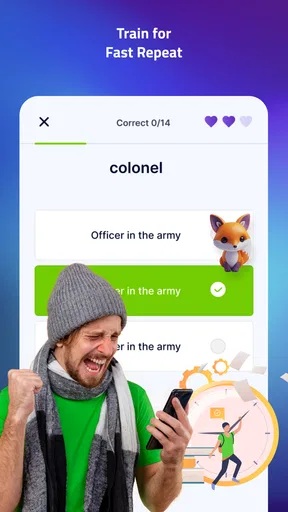
Learn Fast & Speak Fluently is a language learning app designed to help users quickly acquire new languages through interactive lessons and practice exercises. It uses a combination of audio, visual, and text-based activities to enhance learning. The app employs spaced repetition and real-world conversation practice to ensure users retain information and can speak confidently.
Is Learn Fast & Speak Fluently suitable for all language levels?
Yes, the app caters to all levels, from beginners to advanced learners. It offers a structured curriculum that starts with basic vocabulary and grammar, gradually progressing to more complex topics. This makes it ideal for users looking to start from scratch or those wanting to refine their existing skills.
Does Learn Fast & Speak Fluently require an internet connection to use?
While an internet connection is necessary for initial downloads and updates, many features of Learn Fast & Speak Fluently can be accessed offline. This includes downloaded lessons and practice exercises, making it convenient for users to study on-the-go without relying on Wi-Fi or mobile data.
What languages are available in Learn Fast & Speak Fluently?
The app offers a diverse range of languages, including popular choices like Spanish, French, Mandarin, and German, as well as less commonly studied languages. Each language course is tailored to the specific linguistic and cultural nuances, providing a comprehensive learning experience for every user.
Are there any subscription fees for Learn Fast & Speak Fluently?
Learn Fast & Speak Fluently offers a free version with limited access to lessons and features. However, to unlock the full suite of content and advanced functionalities, users need to subscribe to a premium plan. Subscription fees vary based on the plan duration, with options for monthly or annual billing.


